Electrical design for building services. Backed by practice and teaching.
A design error costs many times more on site. That’s why I combine three perspectives in my work: the designer’s, the installer’s and the lecturer’s.
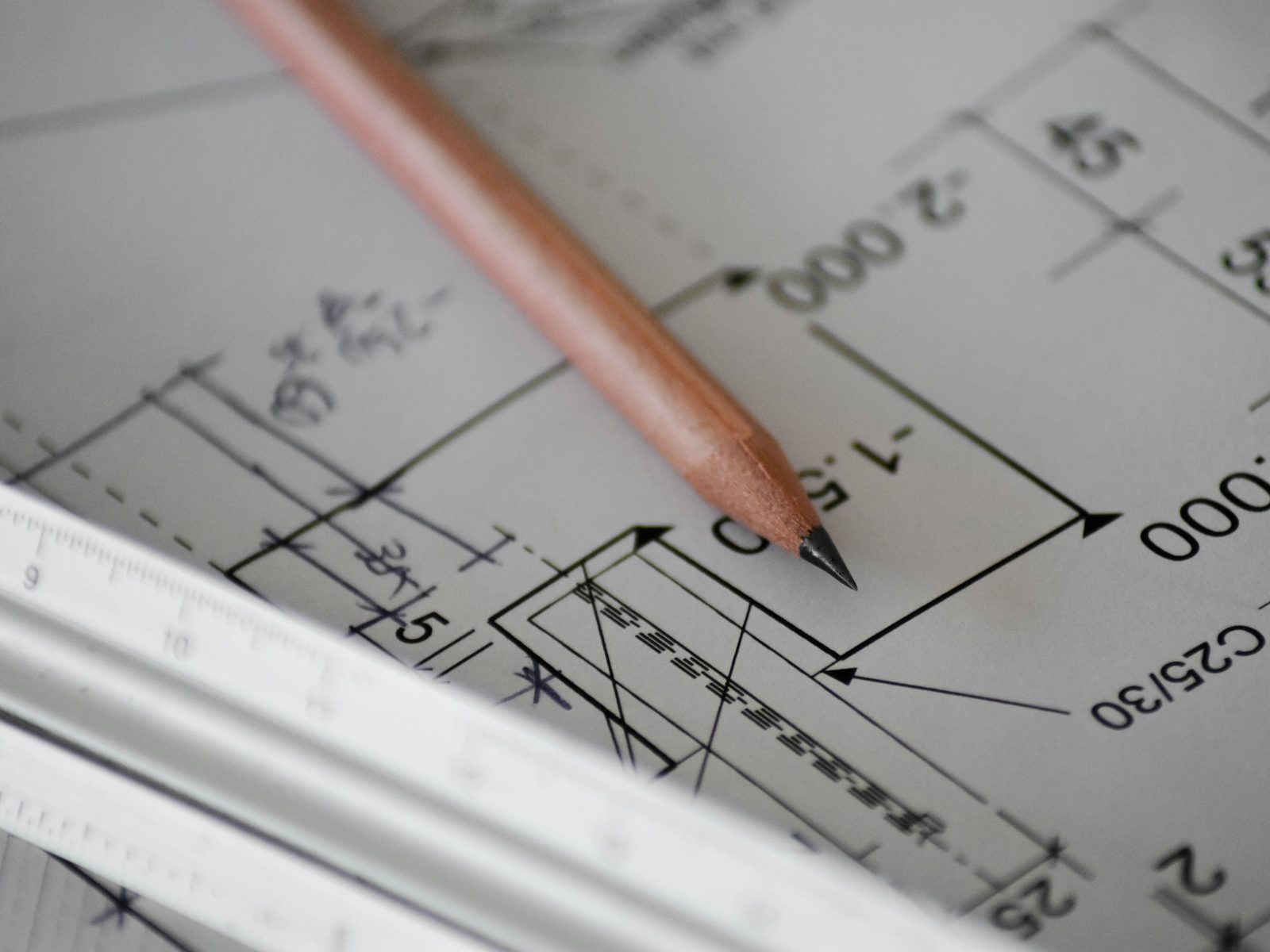
Focus: electrical design for building services (MEP)
Buildings bring many trades together. Electrical design therefore has to do more than produce correct drawings. It has to be coordinated, compliant and buildable. At Ingenieurbüro Spiegl in Munich, I designed and supported major construction projects across all HOAI work stages. As client representative at Helmholtz Zentrum München, I coordinated and supervised the construction projects on its Munich campus.
HOAI work stages (German fee scale for architects and engineers)
Stage 1 Basic evaluation · Stage 2 Preliminary design · Stage 3 Design planning · Stage 4 Approval planning · Stage 5 Detailed design · Stage 6 Preparation of tender · Stage 7 Assistance with contract award · Stage 8 Site supervision · Stage 9 Post-completion services
Systems and trades
- Low-voltage systems and power distribution
- Grid connection to TAB and VDE-AR-N 4100
- Generation and storage systems to VDE-AR-N 4105
- Electrical installations in commercial, residential and industrial buildings
- Lighting and emergency lighting
- Backup power supply
- Fire alarm systems
- Communication networks (Ethernet)
Standards and regulations
DIN VDE 0100 · DIN VDE 0100-410 (protection against electric shock) · DIN VDE 0100-420 (protection against thermal effects) · DIN VDE 0100-600 (initial verification) · DIN 18015 (electrical installations in residential buildings) · TAB (grid operator’s technical connection conditions) · VDE-AR-N 4100 · VDE-AR-N 4105 · DIN 276 (cost group 440 electrical systems, cost group 450 communication, safety and IT systems)
Software
- AutoCAD
- Revit
- DIALux
- EPLAN
- SIMATIC
- MS Office
Want a design that works on site, not just on paper? Let’s talk.
Complement: energy technology
The energy transition is changing building services too. Grid connection, generation and storage have to work together safely. I size low-voltage networks and know switchgear and current-limiting systems from installation. I have carried out measurements on transformer substations and built battery storage systems at the Research Center for Energy Economics. For building design, that means I understand the power supply from the grid connection to the final circuit.
- Sizing of low-voltage networks
- Switchgear and current-limiting systems
- Measurements on transformer substations
- Battery storage systems
- Electrical machines (also as a teaching subject)
- Switching authorisation
Complement: automation & control engineering
As an electrician, I designed, planned and implemented control and automation solutions myself. I work with SIMATIC S7 and WinCC and network components via Profinet and Profibus. That knowledge helps wherever building services and automation converge.
- PLC technology: SIMATIC S7
- Visualisation: WinCC
- Industrial communication: Profinet, Profibus
- Pumps, valves, motor controls and hydraulic controls
- Control and regulation systems
Knowledge I pass on
I know all these fields not only from practice and design. At IU International University of Applied Sciences, I pass my knowledge on to the next generation of engineers. I am responsible for the Electronic Circuit Design module and teach Electrical Machines and Energy Technology.
For you, that means two things. Expertise I continually deepen. And the ability to explain complex technology clearly: in the project team, to clients and in every technical document.
Qualifications at a glance
- Electrical Engineering and Information Technology (B.Eng., M.Sc.)
- Qualified electrician
- Electrical design and client representation, HOAI work stages 1–9
- Switching authorisation
- Software: AutoCAD, Revit, DIALux, EPLAN, SIMATIC S7, WinCC, MS Office
- Languages: German, English (C2)
Does my profile match your requirements?
Looking for an electrical project engineer who combines design, execution and the client’s perspective? Let’s talk.